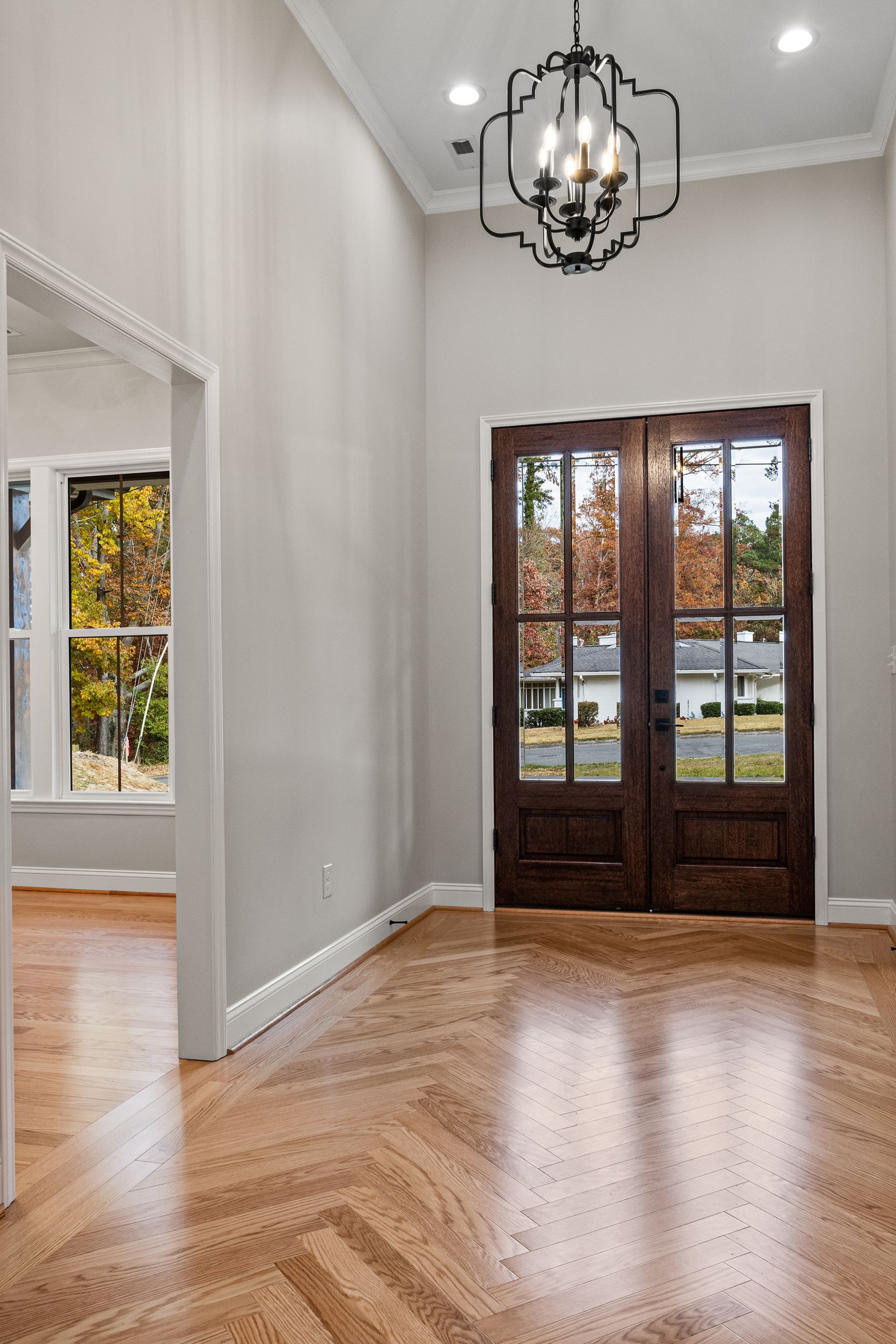
Scale is the whole argument.
An entry door that matches the ceiling height changes the proportion of a facade more than almost any other single element.
Pivot systems make that scale practical: the hinge point moves inboard, the load is carried differently, and a door that would be unwieldy on conventional hinges opens with one hand.
Beyond scale, the entry is a material decision. How the door meets the surrounding wall, whether it reads as solid or glazed, what the handle feels like — these are what make an entrance feel considered rather than merely large.
Design directions.
Actual capabilities and size limits are confirmed against verified product data before specification.
Pivot To verify
Oversized panels on a pivot hinge, for entries drawn at full architectural height.
Oversized Swing To verify
Conventional swing operation at a larger-than-standard scale.
Glazed Entry To verify
Glass-forward entrances that carry daylight into the hall and connect to the glazing package.
Solid & Metal-Clad To verify
Solid-reading entrances where privacy and material presence lead the design.
Options to settle.
The entry is where small decisions are most visible. These are the ones worth spending time on.
Available options vary by system and are confirmed against verified product data before any specification is issued.
- Material To verify
- Glass and glazing treatment To verify
- Finish, standard and custom To verify
- Handles and hardware To verify
- Sidelites To verify
- Transoms To verify
Entrance gallery.
Entry photography lives or dies on the detail shots. Replace every placeholder before launch.
Design the entrance.
Send the elevation or a photograph of the existing entry and we will work through the options.